How to Repair Your Credit Rating Quickly?
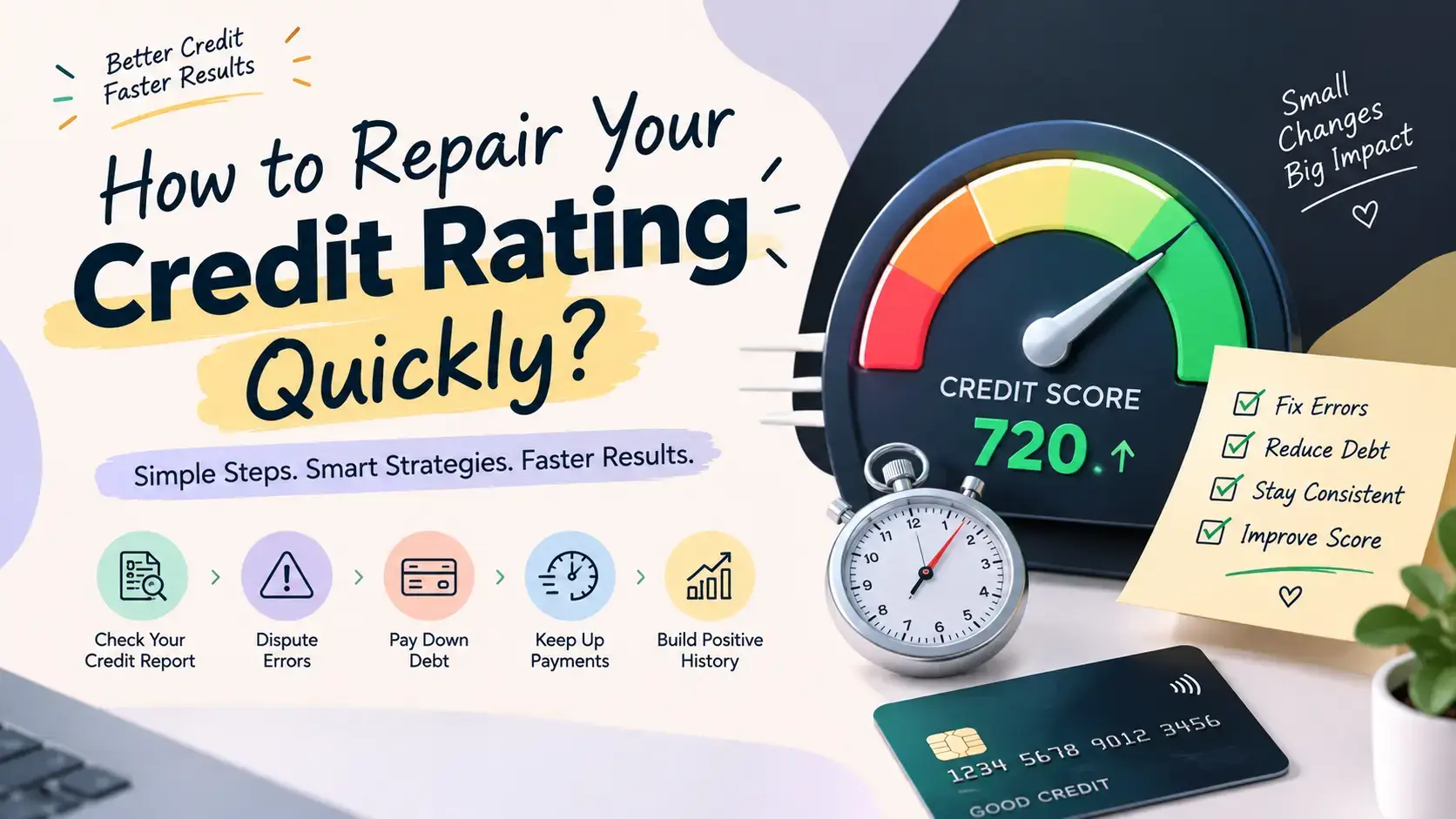
Everyone wants to improve their credit score more quickly, and some strategies actually do work more quickly than others. However, "quickly" in credit repair has its limitations: positive payment history takes months to establish, and credit bureaus have up to 30 days to look into a dispute. Anyone who promises a significant increase in days is either offering something you shouldn't buy or exaggerating what they can manage. You can achieve this by starting with the fastest legal levers and operating them simultaneously.
1. Pay down credit card balances (can help within 30-45 days)
The fastest approach to improve your score is typically to increase your credit utilisation, or the percentage of your available revolving credit that you are utilising. A paydown may appear in your score within one or two billing cycles because it is determined by the balances your card issuer reports each month.
-
Aim for less than 30% utilisation overall and on each card, and if at all possible, less than 10%.
-
Since it is often the balance that is stated, pay the remaining amount before the statement closure date.
-
Request a credit limit increase (only if it doesn't result in a hard inquiry) if you are unable to pay off the amount immediately. This will reduce your ratio without requiring you to make a payment.
2. Dispute errors on your credit reports (about 30-45 days per round)
The quickest way to get rid of a negative item on your report is to fix any errors. Get the three reports at AnnualCreditReport.com for free, then search for:
-
Accounts not owned by you
-
Payments you made on time that were marked as late
-
Identical accounts or collections
-
Erroneous dates or balances
Send Equifax, Experian, and TransUnion a specific, documented dispute. The information must be deleted if the creditor is unable to verify it within the 30-day period. Uncertain, recurring disagreements take longer to settle than specific ones with supporting evidence.
3. Pay off debts that are past due (immediate effect on future harm)
Every month that an account remains outstanding, it continues to cause harm. Even while the earlier late payments remain on your record, bringing it up to date instantly stops the bleeding. If you're behind, get in touch with the lender first; some will arrange a catch-up.
4. Request goodwill deletions for sporadic late payments
A brief goodwill letter to the creditor requesting that they erase the mark as a courtesy can occasionally be effective if you have one or two late payments on an otherwise spotless account. It's free and only takes a few minutes to try, but it's totally up to them.
5. Use a secured card or credit-builder loan to add good credit history
Although these items don't provide an immediate boost, they immediately start to establish a favourable payment history. Maintain minimal amounts and make monthly payments on schedule. Instead of paying off right away, this is a quick-to-start strategy that takes three to six months to pay off.
6. Add yourself as a permitted user to a well-kept account
If you trust the person and their credit history, adding them as an authorised user could help your credit score if they have had a card for a long time and have paid it off without any problems and used it very little. The effect is different based on how the scoring model counts accounts with authorised users and whether the issuer reports them. If the main account isn't in good shape, it's not helpful at all; otherwise, everyone is at risk.
What won’t make your credit better quickly (and can backfire)
-
"Credit privacy numbers" (CPNs): These are marketed as a quick method to start afresh, but using one is federal fraud because they are usually Social Security numbers that are abused.
-
Disputing accurate items in bad faith: If you challenge everything in the hopes that something will fall off, your valid arguments may be slowed down and labelled as frivolous.
-
Your score can go down if you close old accounts because they will have a lower average age and a higher usage ratio.
-
Applying for a large number of new credit accounts at once can appear dangerous, and each hard inquiry has a tiny negative impact.
-
Paying a business up front: The Credit Repair Organisations Act prohibits a credit repair business from charging you before completing the services they have promised.
A realistic fast-track timeline
|
Timeframe |
What you can realistically expect |
|
Weeks 1-2 |
Pull reports, identify errors, file disputes, pay down card balances |
|
Weeks 4-8 |
Results from first dispute round; utilization improvements start showing |
|
Months 2-3 |
Second-round disputes on stubborn items; goodwill and negotiation outcomes |
|
Months 3-6 |
Positive payment history from new accounts begins to register clearly |
|
Months 6-12 |
More substantial recovery, especially if you’ve avoided new negative marks |
Most people with a few fixable problems see real progress within one to three months, mostly from using the system more effectively and fixing mistakes. It takes longer to get over real bad things like collections, charge-offs, or repossessions, because those only fade over time or as they are negotiated.
Getting help from outside sources can make things go faster
When you have a lot of bad things to do at once, the time it takes to keep track of every dispute, deadline, and follow-up is often what slows things down. That job can be done by a credit repair service. Some, like Heads Up Financials, offer a six-month one-on-one mentorship program led by a strategist that combines multi-bureau dispute work with a broader financial roadmap.
This can help people whose goal is more than just cleanup, like getting a mortgage or business funding. Legally, no one can promise a certain score increase or time frame, so make sure you get written confirmation of price, billing dates, and contract terms before you pay anything.
A short list to get you started
-
Today, get copies of all three credit reports.
-
Write down every mistake, duplicate, or out-of-date thing.
-
Send clear, written complaints to each bureau.
-
Pay off credit card amounts below 30% (ideally 10%) before the due dates on your statements.
-
Pay off any bills that are past due.
-
For small amounts of late payments, send letters of goodwill.
-
If your credit is bad or not good, get a secured credit card or a loan to help rebuild it.
-
A minimum payment should be set up for each account.
-
After 30 to 45 days, look over your reports again and tell them anything that is still wrong.
Frequently asked questions
How can I improve my credit score quickly?
Most people find that lowering their credit card use is the fastest valid lever, followed by fixing real mistakes on their reports.
In 30 days, can I fix my credit?
It's possible to fix a single wrong thing or a high utilisation rate in one month. It takes longer to fully recover from a lot of bad things.
Does my score go up as soon as I pay off a collection account?
Not all the time. It depends on the scoring model, and just because you paid a collection doesn't mean it's no longer on your record. It is taken down by a written pay-for-delete agreement that is signed before payment.
Are credit repair services that promise a "quick fix" real?
If someone says they can get you a certain point increase or results in days, don't believe them. Real companies talk about their process, not the results they promise.